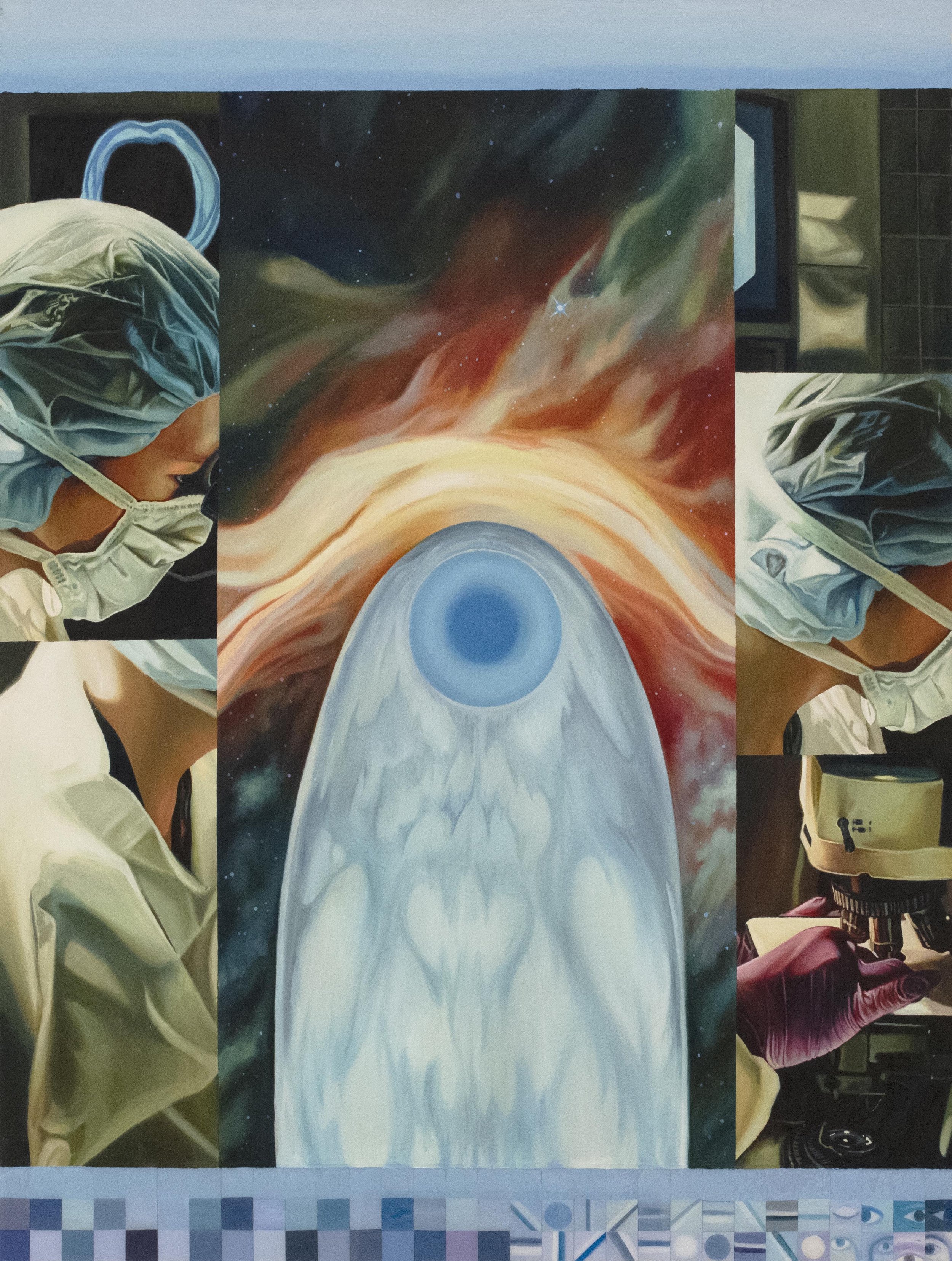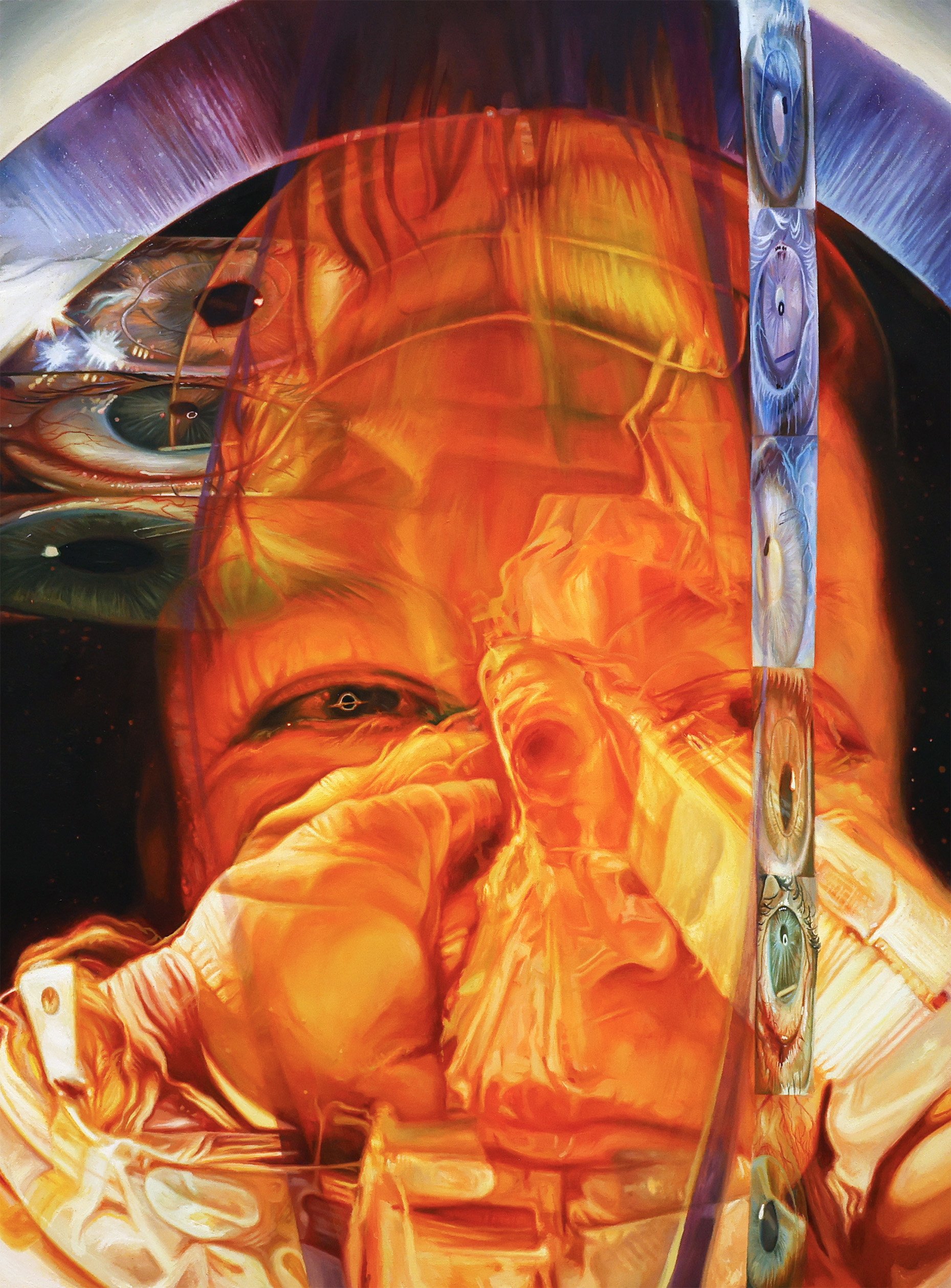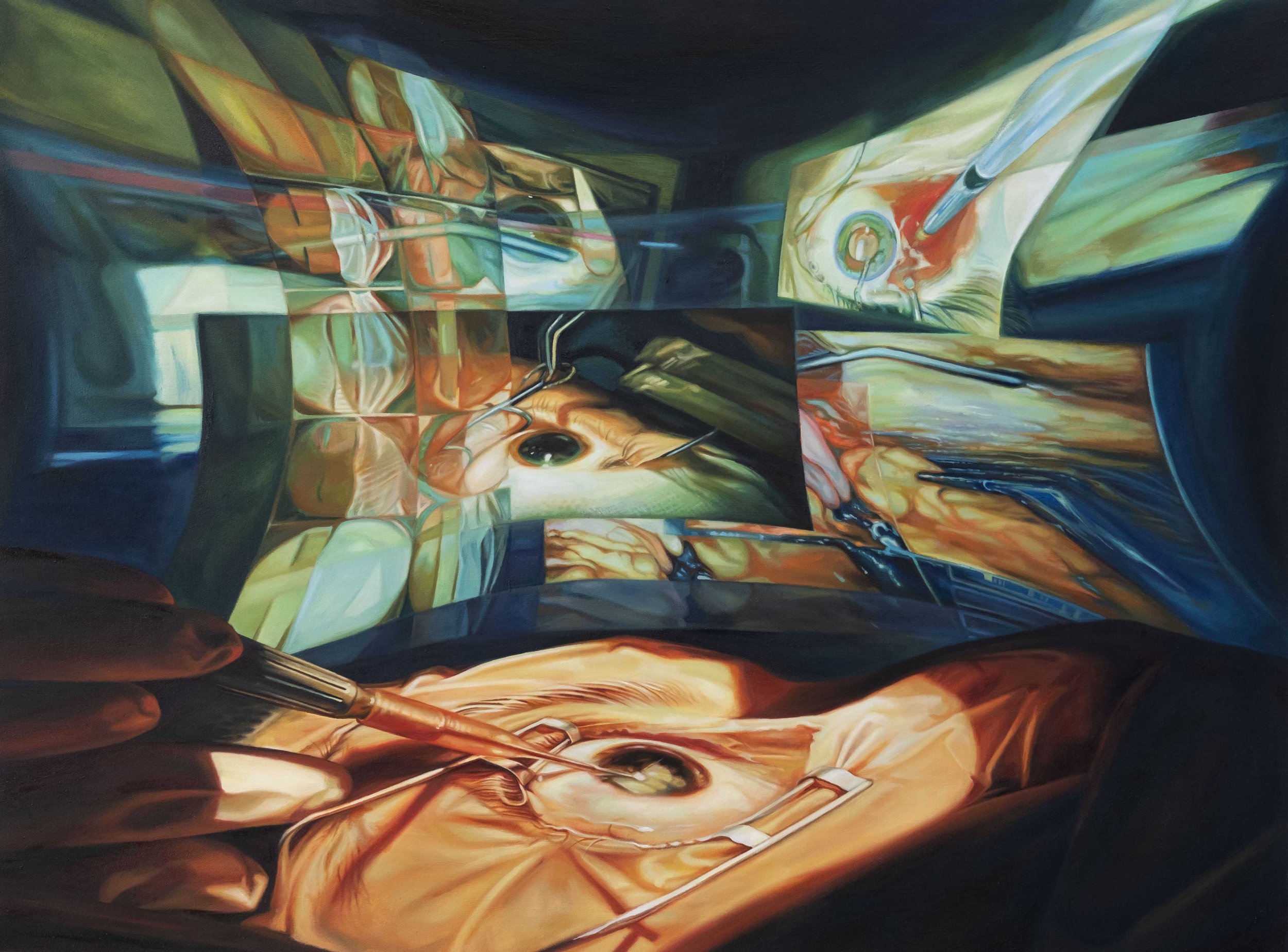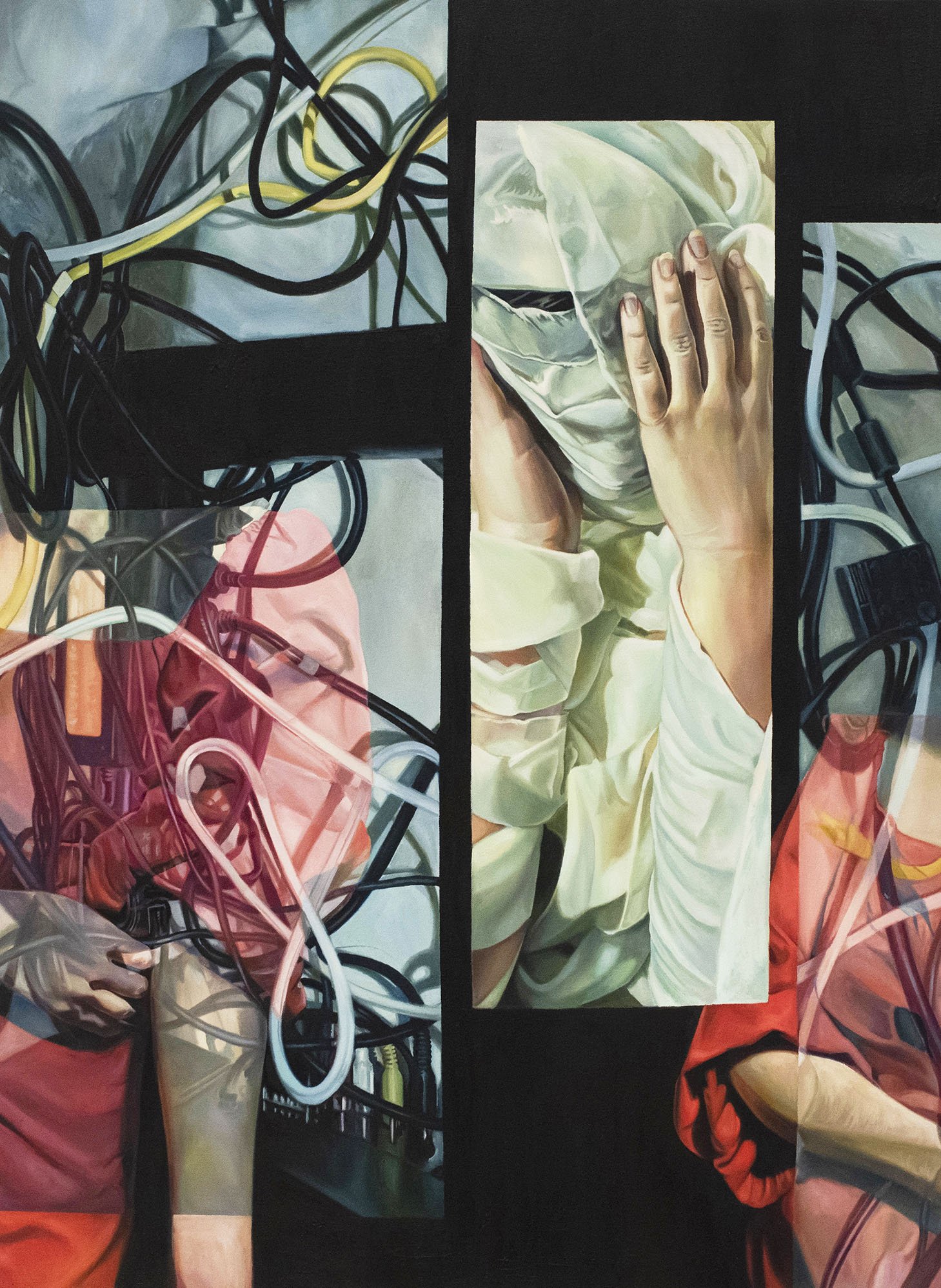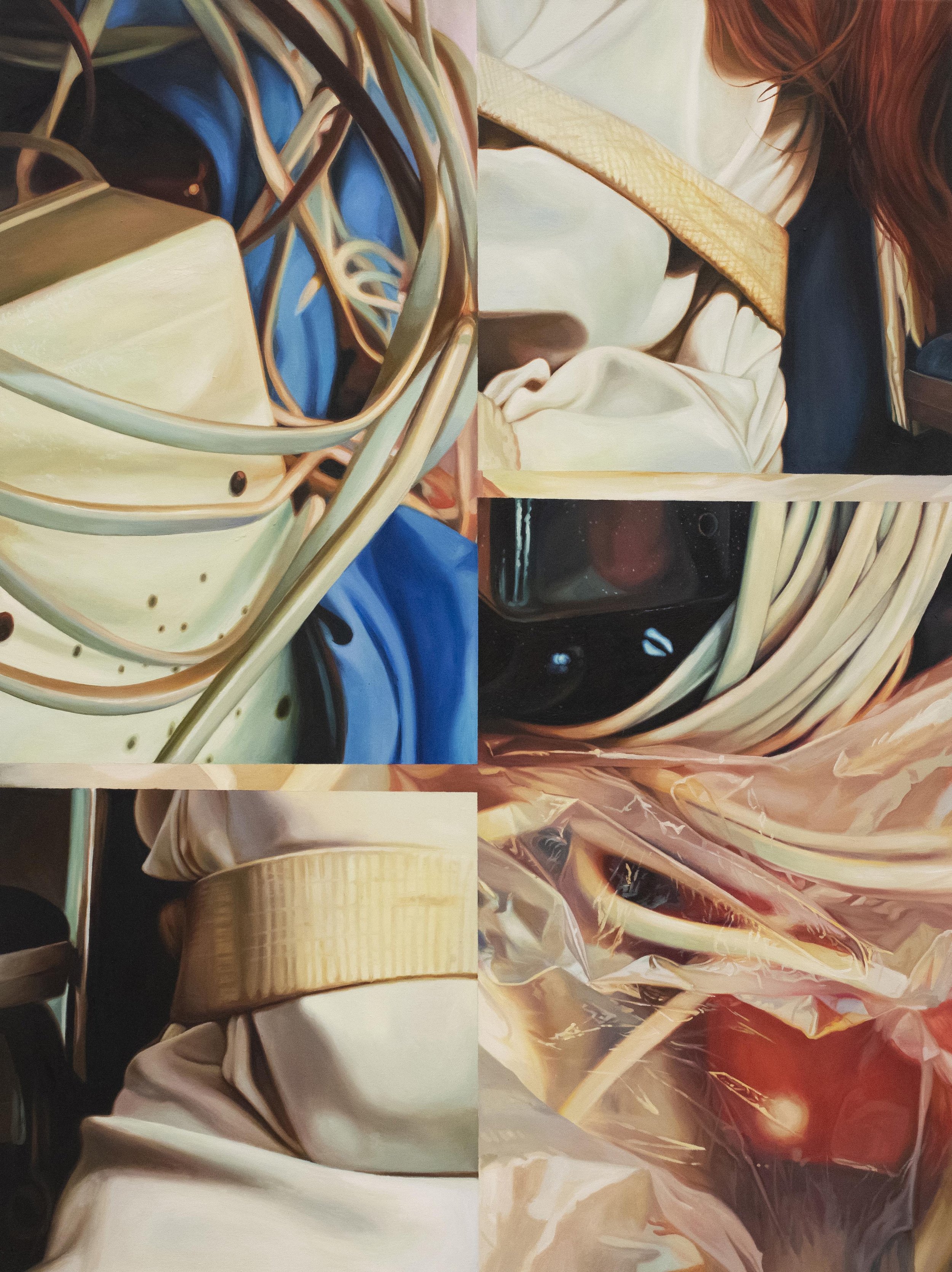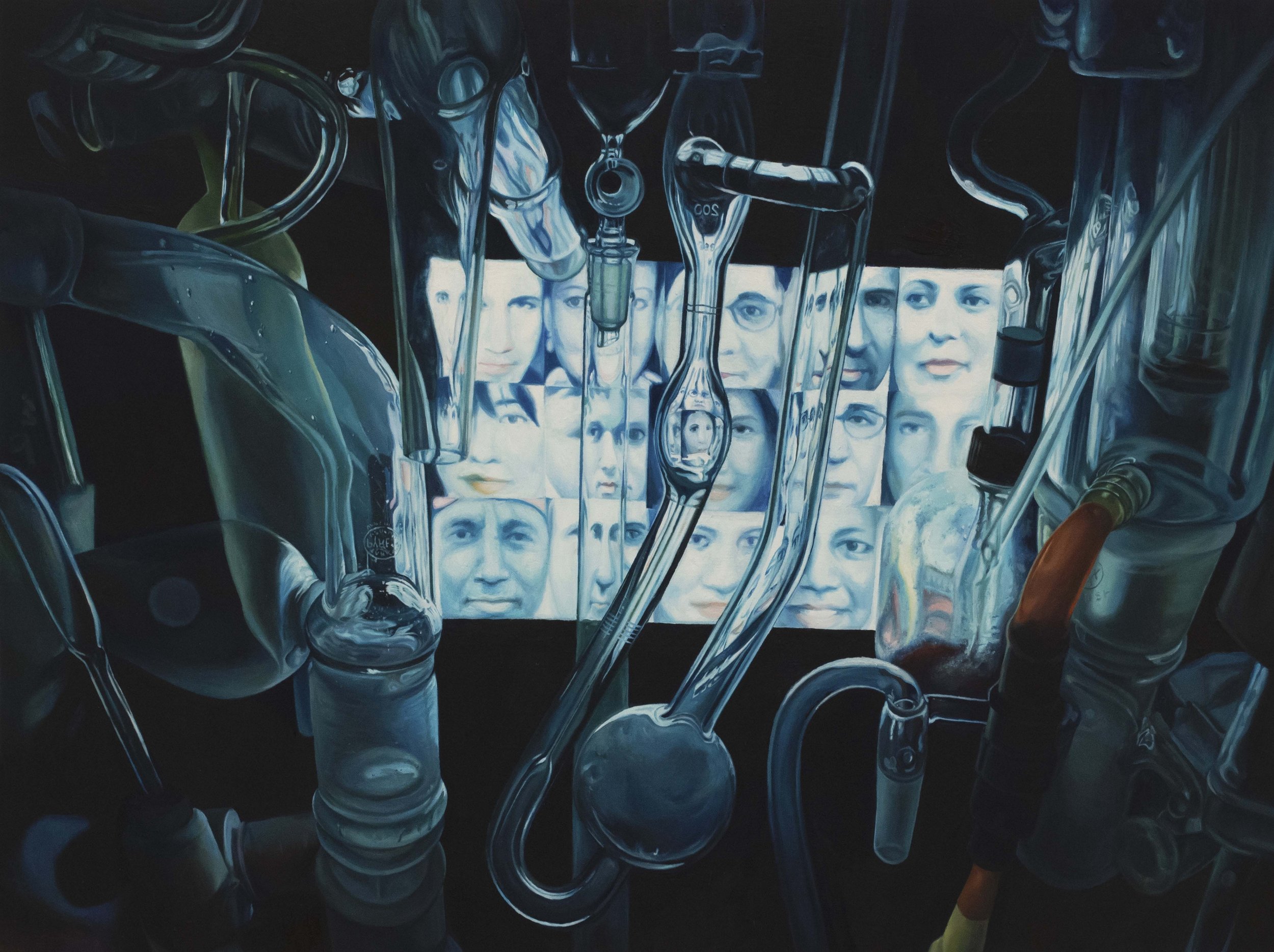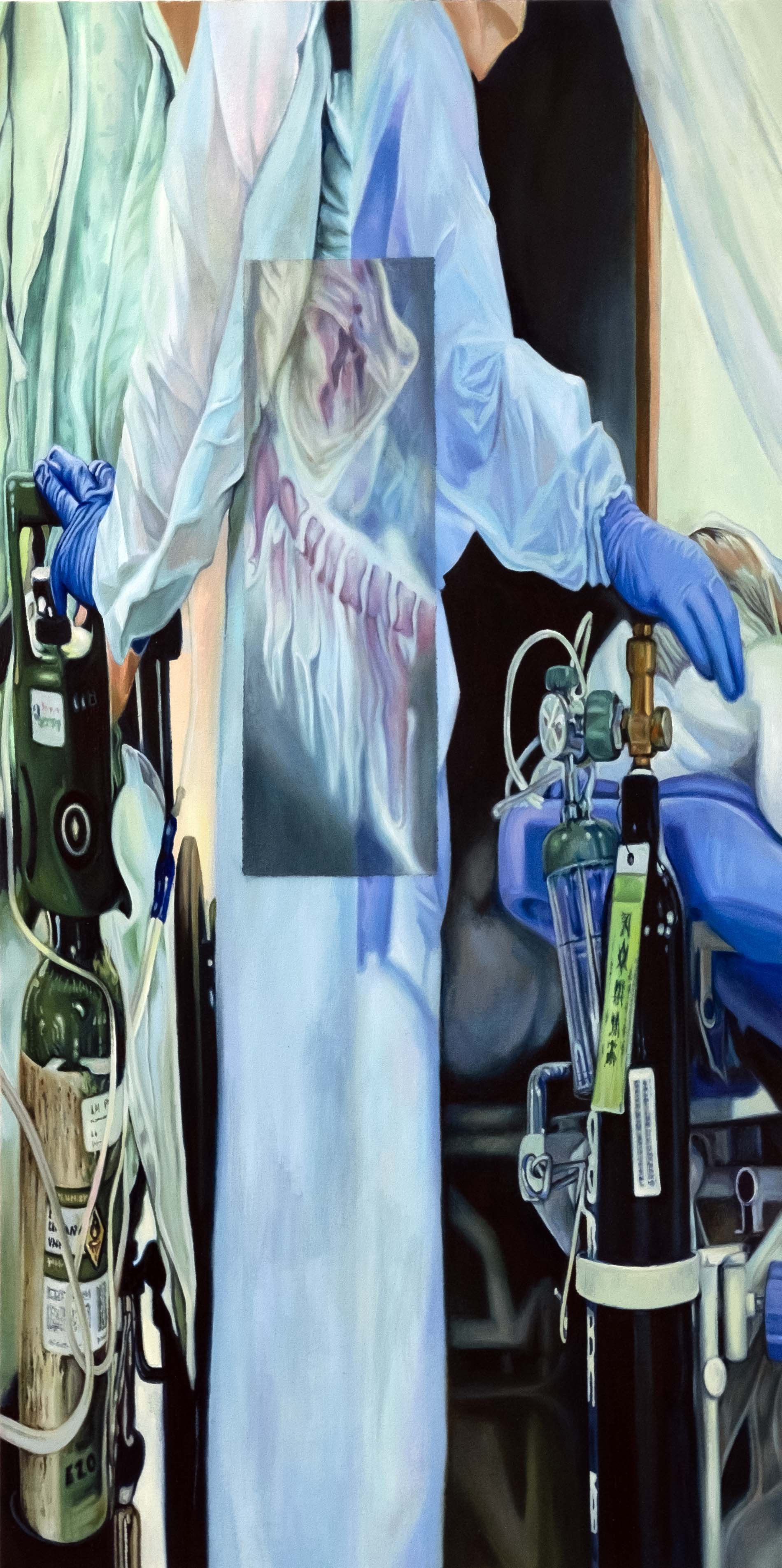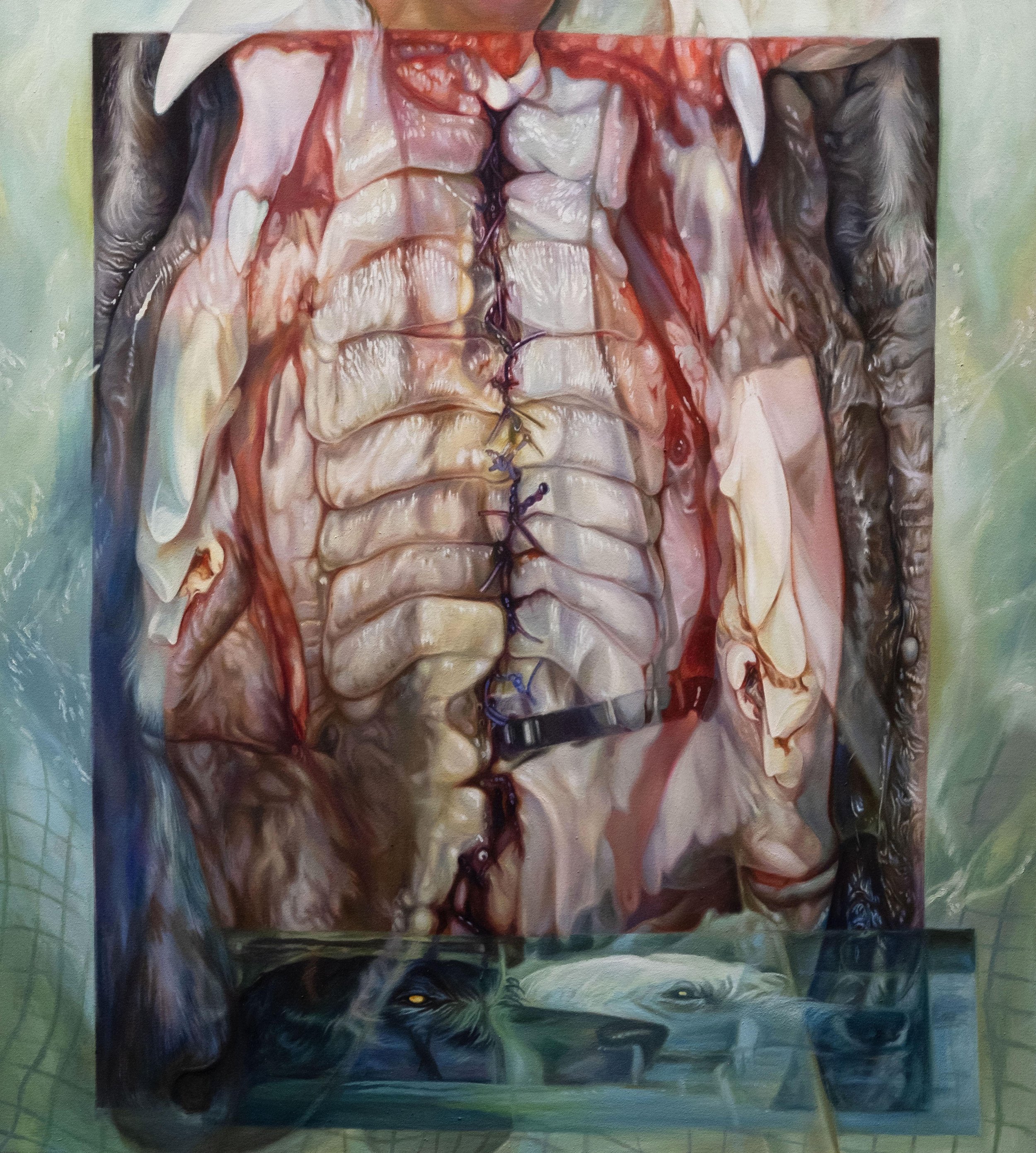
In Vivo, oil on canvas, 33.5 x 40 in. 2023
Distant Vision, oil on panel, frosted microscope slides, 40 x 30 in. 2023
Lightless Eyes, oil on canvas, 48 x 36 in. 2025
Under Every Eye, oil on canvas, 38 x 48 in. 2024
Hazard Zone, oil on canvas, 40 x 30 in. 2023
Monitor, oil on canvas, 40 x 30 in. 2025
Hydra, oil on canvas, 48 x 30 in. 2024
Latent Permutations, oil on panel, 36 x 48 in. 2023
Cage for a Ghost (for Rowf and Snitter), oil on canvas, 38 x 36 in. 2025
Among the Impersonal, oil on canvas, 48 x 36 in. 2024
Aerial Arterial, oil on canvas, 48 x 36 in. 2022-2023
Emulator, oil on canvas, 48 x 36 in. 2024
Interbody, oil on canvas stretched over wood board, 30 x 40 in. 2025
Sliver, oil on canvas, 40 x 30 in. 2024
Coil (II) / Siren Spinning, oil on canvas, 36 x 48 in. 2024
Amnion’s Pearl, oil on canvas, 36 x 48 in. 2024
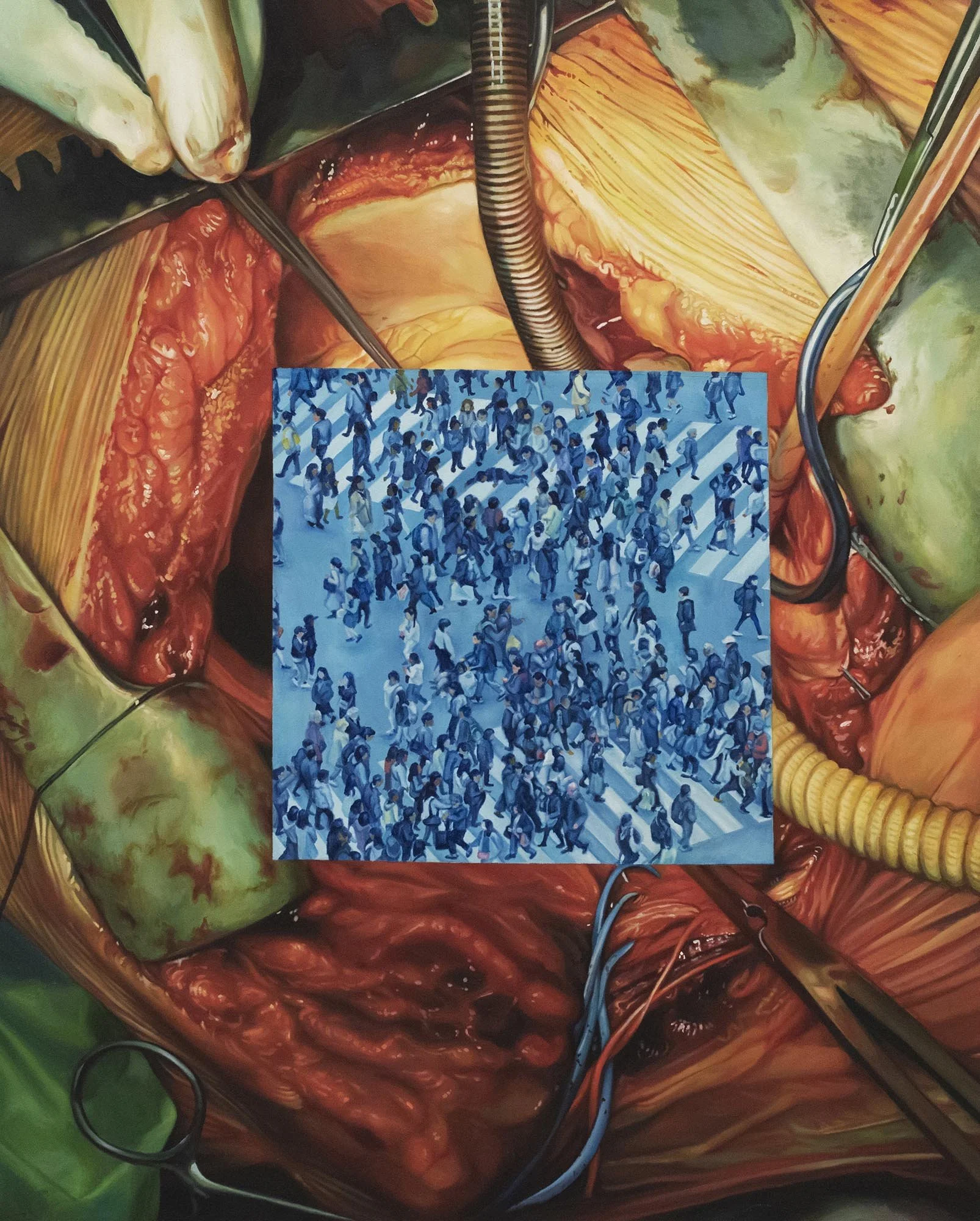
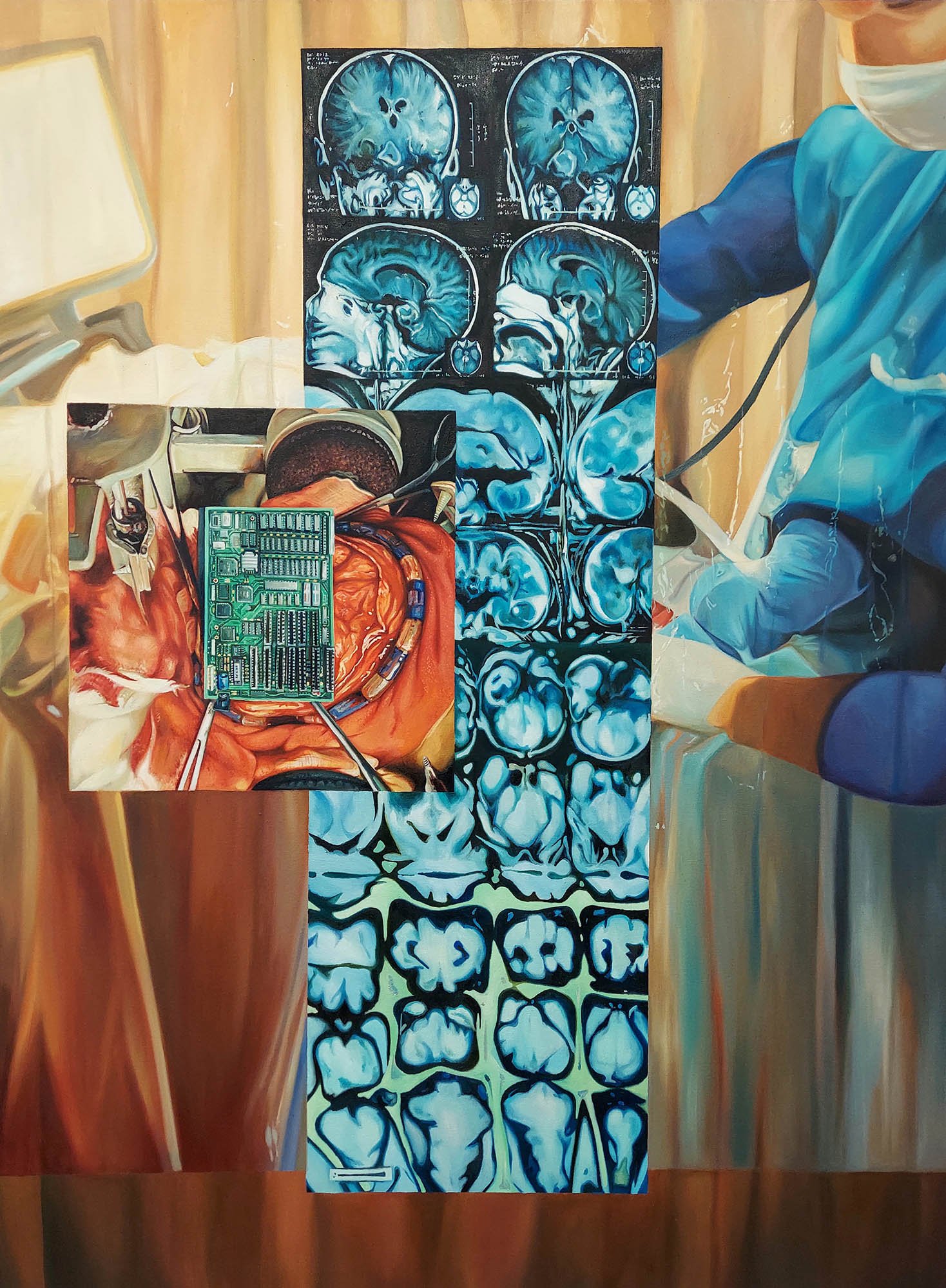
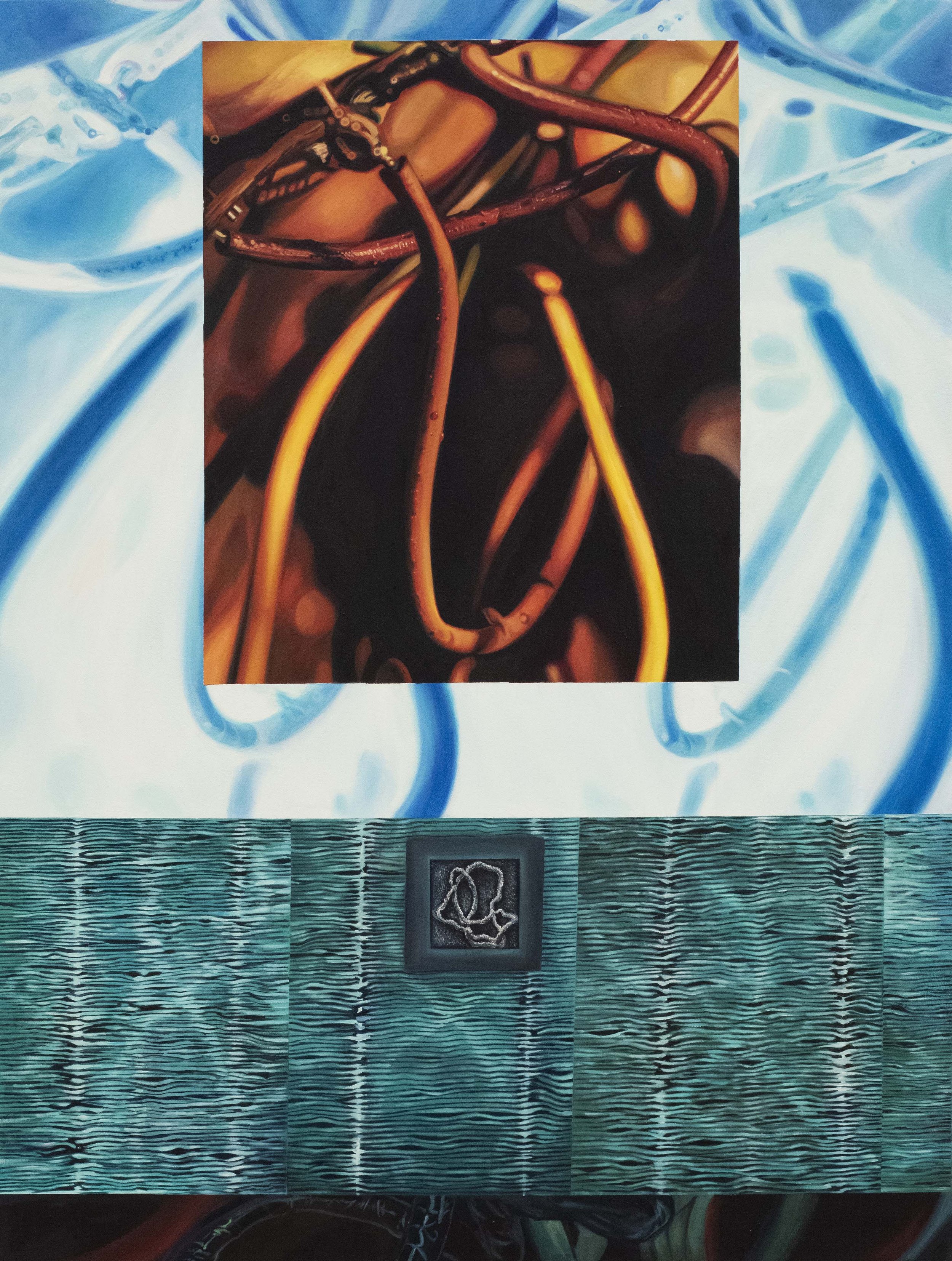
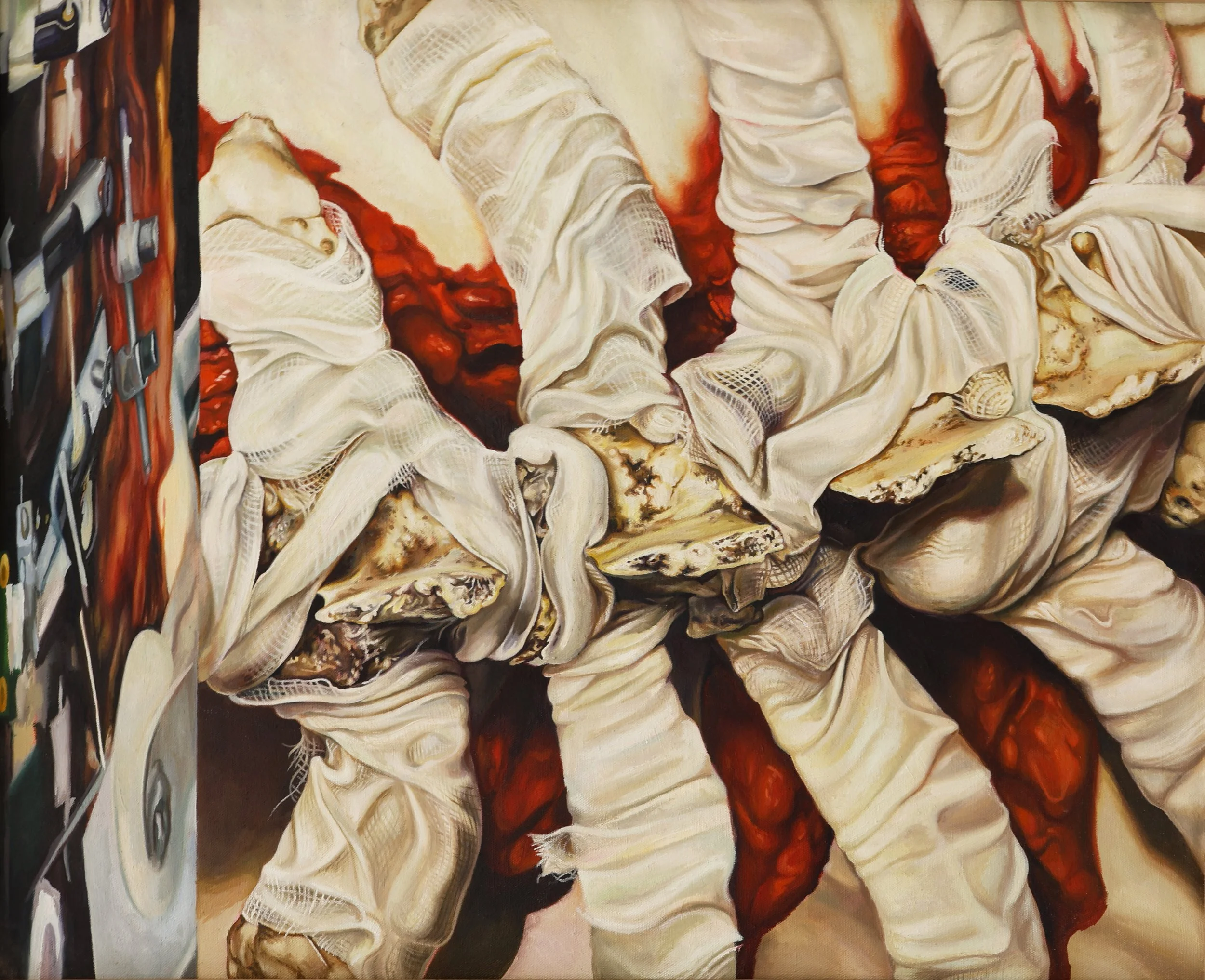
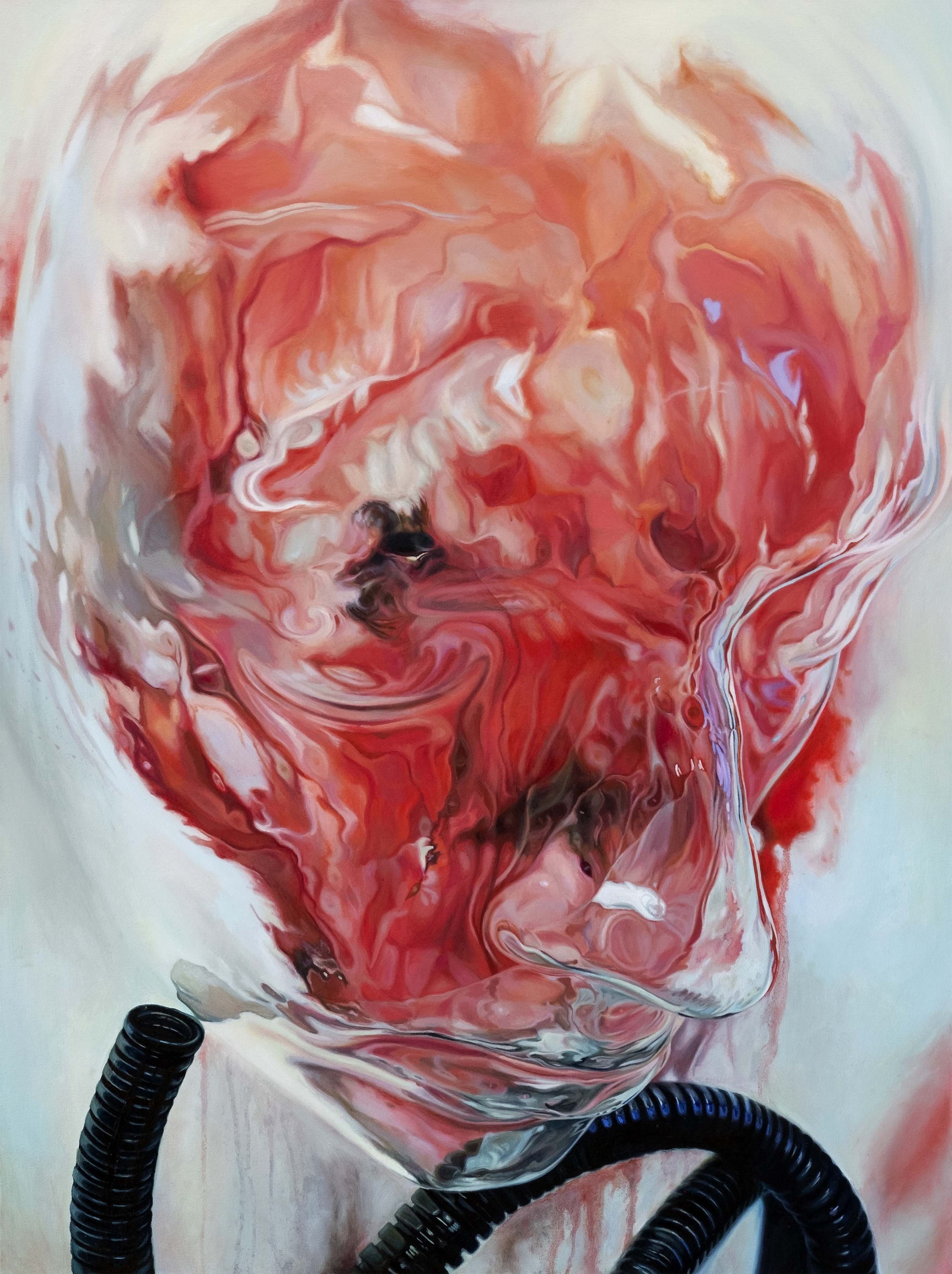
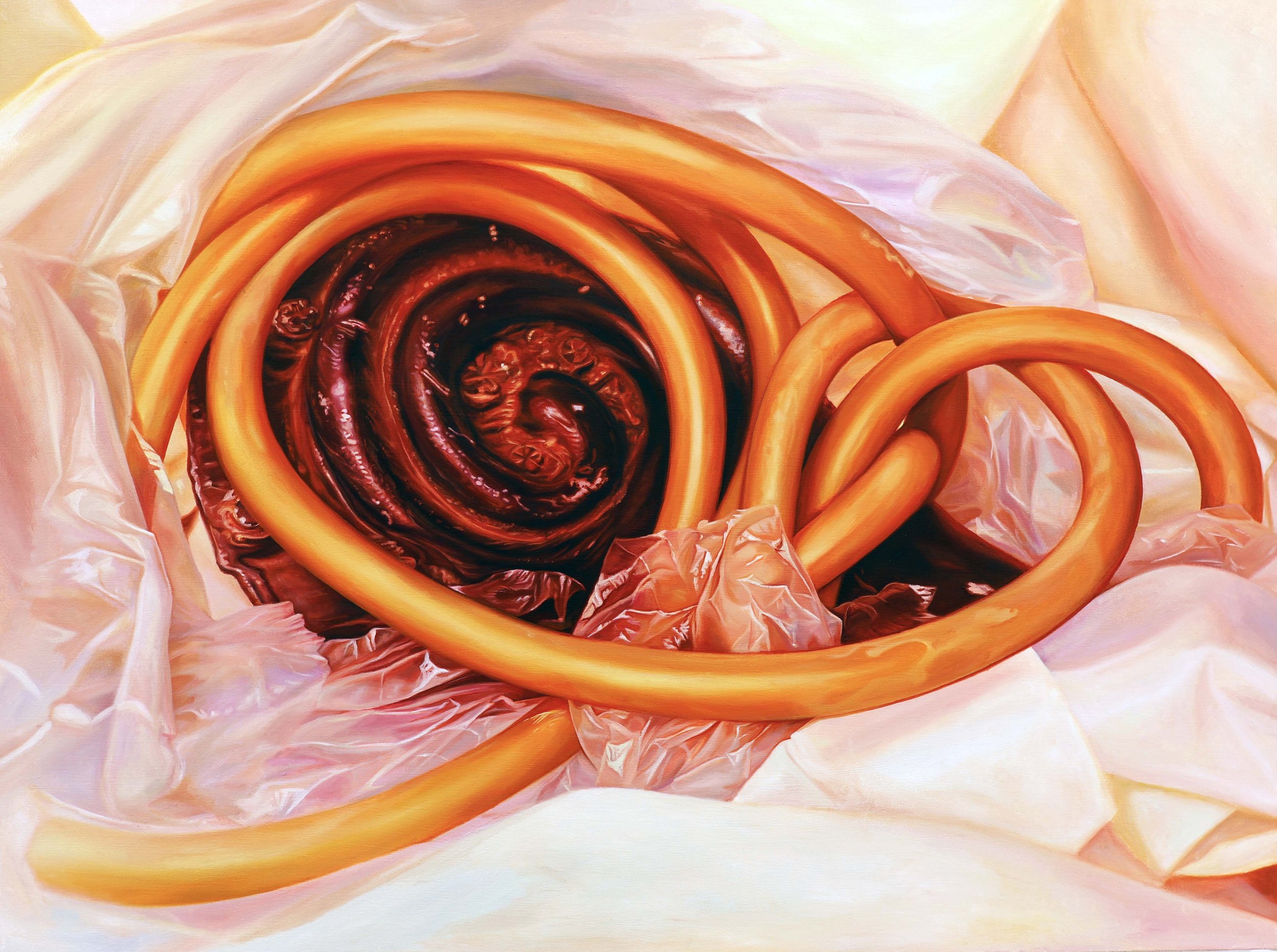
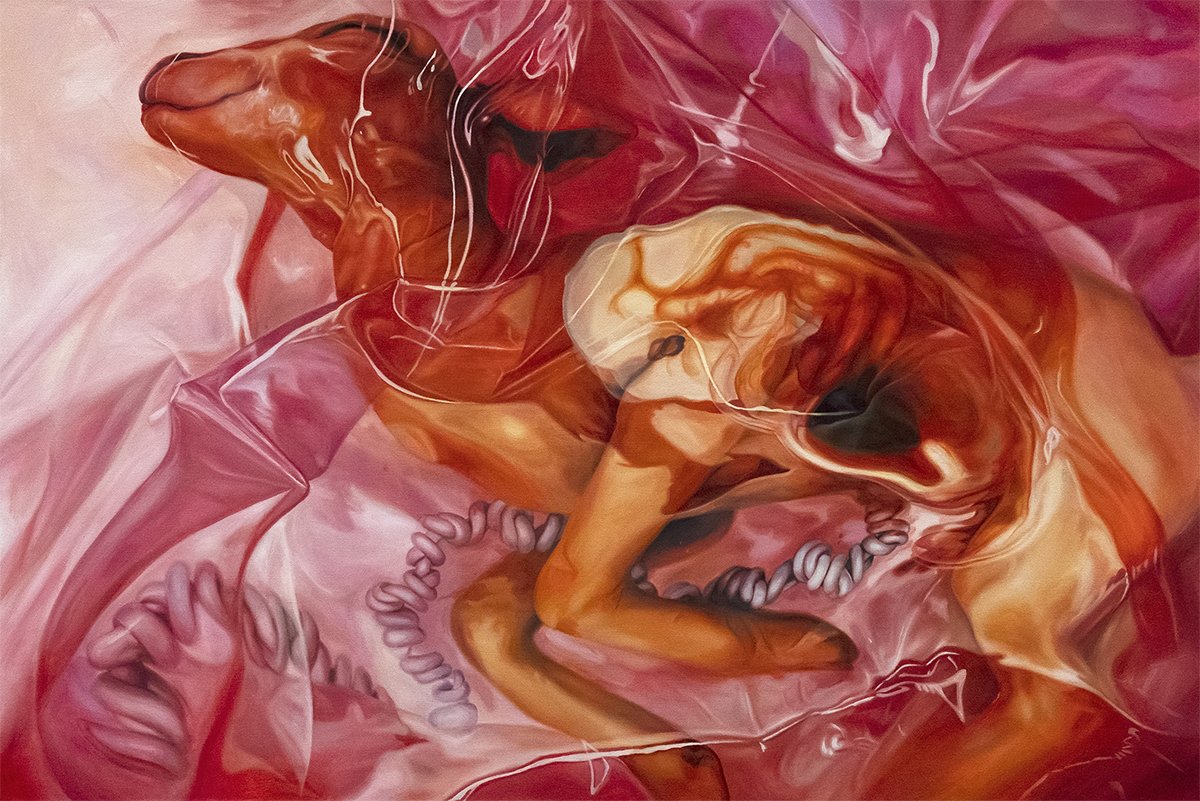
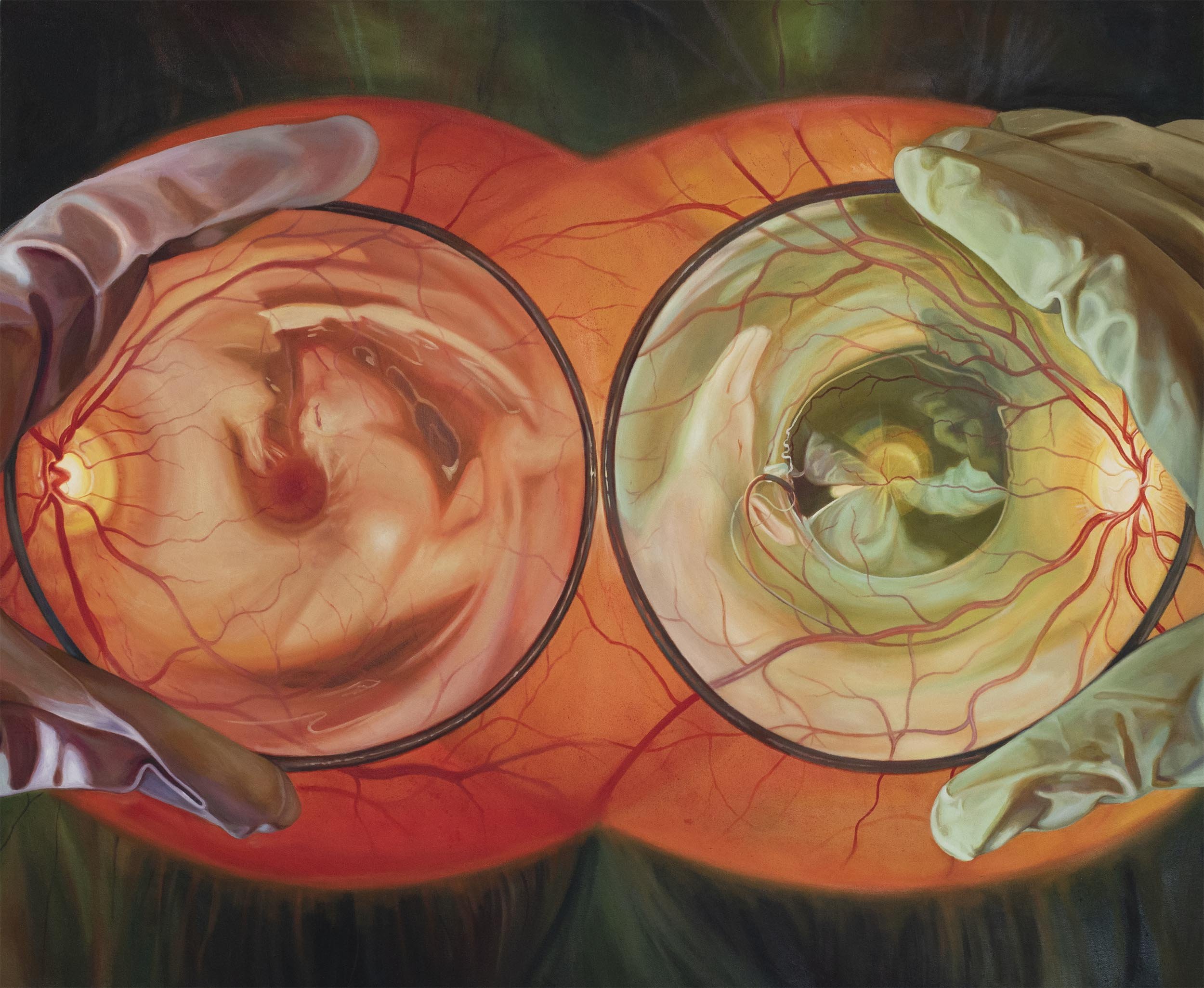
In Vivo takes its title from a biological term describing processes conducted within a living organism. While the phrase denotes organic life, it also points to the increasing entanglement of living systems with the technologies that observe, intervene upon, and transform them.
The paintings examine this tension between biological life and technological mediation. Rendered in oil, the works depict fragmented bodies, human and animal forms, medical apparatuses, and machines that echo organic structures. Close-up perspectives and ambiguous spatial relationships disrupt a stable sense of inside and outside, producing images that feel simultaneously intimate and estranged.
Rather than framing biotechnology as either salvational or destructive, In Vivo lingers in the paradox it creates: technologies that extend life while also altering its conditions. Themes of preservation, augmentation, and mortality surface through distorted forms and layered surfaces, where realism gives way to uncertainty. The paintings reflect a contemporary condition in which the body is increasingly understood through systems of measurement, intervention, and control, raising questions about vulnerability, agency, and what it means to remain “alive” within technologically mediated environments.